TIDAL just rolled out a pretty cool new feature. Artists in the US can now sell their music straight to fans right on the platform. There’s no middleman and no mandatory subscriptions for anyone involved.
The news was shared by the company’s CEO (@rsa on X), and Jack Dorsey quickly gave it a boost.
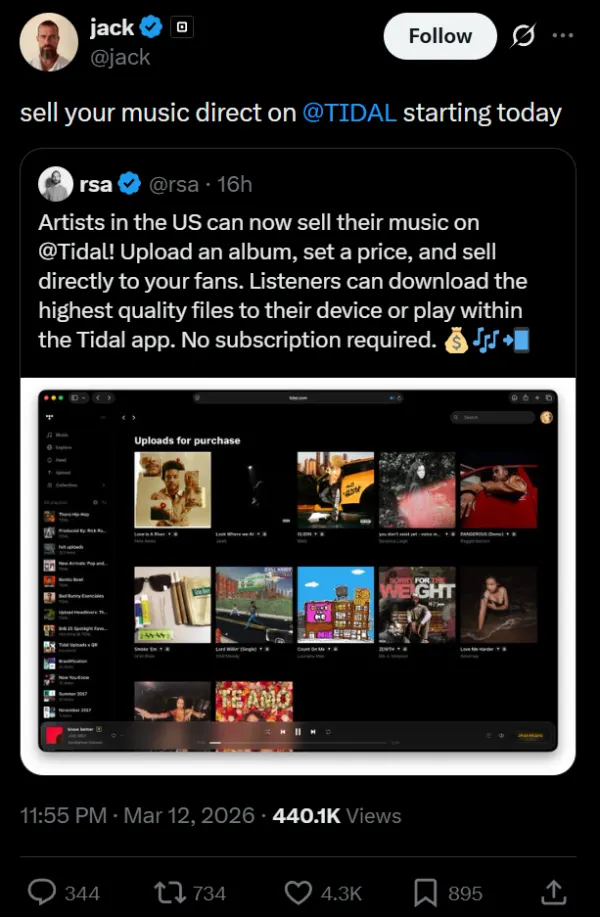
For artists, the split is clean and attractive. They can pick their own price for albums or individual tracks, and pocket 90% of each sale. TIDAL says it will keep just 10%. Nothing sneaky from their end. Stripe processes everything, so there’s a small checkout fee for buyers around 2.7% plus $0.29, and artists pay a modest withdrawal fee of 0.25% plus $0.25 per payout.
Users who purchase tracks have a choice. They can download the highest-quality files available and keep them forever, or simply stream the tracks in the TIDAL app as usual.
In a help article, TIDAL says that this is currently limited to US-based artists who fully own or control every piece of what they’re selling — the recording masters, composition, lyrics, samples, artwork, all of it. Unlicensed covers are off-limits, and any collaboration needs clear approval from every contributor. TIDAL puts the legal responsibility entirely on the seller, which is straightforward but worth noting.
Meanwhile, the platform is also preparing for bigger integrations with Square and especially Cash App, according to @rsa. Because TIDAL is part of Block, tying into Cash App could suddenly make payouts accessible to a much wider global audience. The current Stripe-only system is a bit restrictive by comparison.
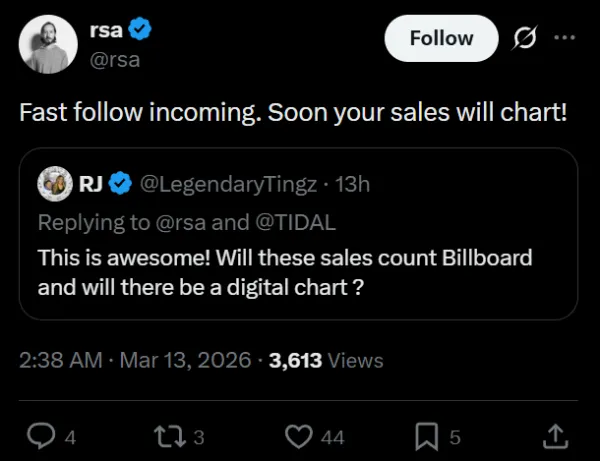
Fans have already been asking about chart impact, and @rsa confirmed that sales counting toward things like Billboard is in the works as a quick follow-up.
The Bandcamp parallels are obvious since both let artists sell straight to supporters. TIDAL is leaning into a different strength though. Instead of a standalone store, this lives inside a streaming platform with an existing crowd that already values high-fidelity sound. You’re reaching people who are already listening in great quality, and they can keep doing so even after buying the files outright.
Reactions on X are mixed as you’d expect. Plenty of people are enthusiastic about the idea, while others wonder why anyone would pay for downloadable audio in 2026 with Spotify around. The doubters make a fair case, because streaming has trained most of us to expect easy access without ownership. Still, for listeners who prefer owning pristine high-res files without a recurring subscription, this offers something genuinely different and straightforward.
What do you think — could this actually move the needle for indie artists, or is it too niche to matter much?


Dwayne Cubbins
2239 Posts
I cover fast-moving stories across apps, online platforms, and everyday tech — phones, wearables, consoles, and whatever else people are fighting with this week. Bugs, rollouts, scams, policy enforcement, and the occasional internet-culture rabbit hole are all fair game. My goal is simple — make confusing tech news readable. When I'm not working, I'm working out or chilling with my dog. Got a tip? You can find me on X @dcubbins.
Next article View Article