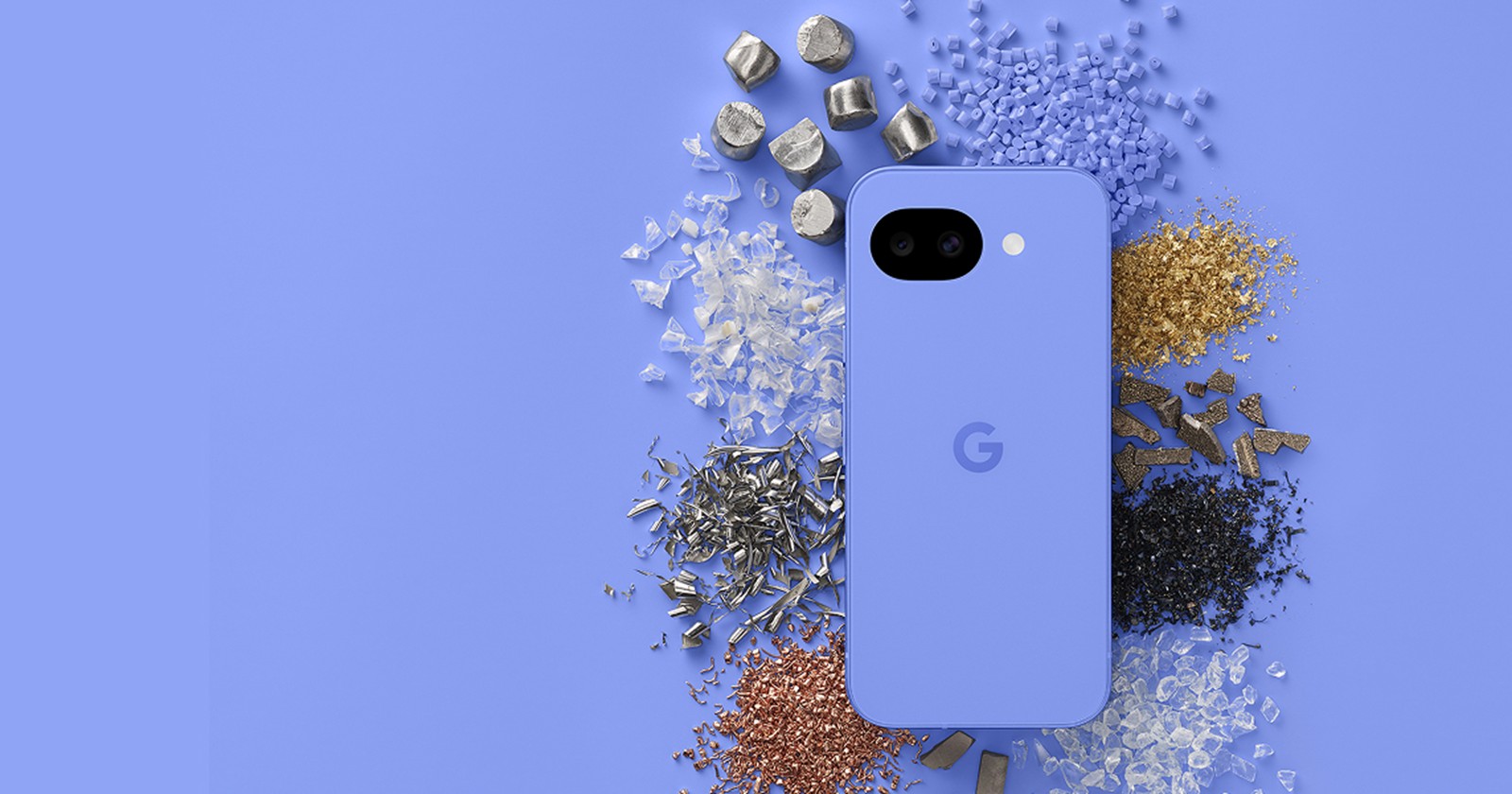
For years, if you wanted the ultimate privacy-respecting smartphone experience, the formula was simple: buy a Google Pixel and flash GrapheneOS. But I’ve been closely tracking the shifting tides between Google and the custom ROM community over the past year, and it’s clear that the golden era of Pixel-exclusive privacy hardware is coming to an end.
Now, the team behind GrapheneOS has opened up about exactly how Google’s recent open-source decisions pushed them away, directly sparking their newly minted partnership with Motorola.
The AOSP shift that broke the camel’s back
To understand how we got here, we have to look back at last June. With the release of the Android 16 source code, Google made a foundational shift: they intentionally removed device trees and driver binaries for Pixel phones from the Android Open Source Project (AOSP). Instead of using Pixel hardware as the reference target, Google shifted to a virtual device called “Cuttlefish.”
At the time, Google VP Seang Chau insisted that AOSP “is NOT going away.” However, this change forcefully demoted Pixels to the same frustrating development level as every other Android phone on the market. Google essentially squashed the Pixel kernel source code’s commit history, removing vital reference points for security patches and feature implementations.
Nolen Johnson from LineageOS accurately predicted this would be a painful transition, forcing developers to “blindly guess and reverse engineer” changes from prebuilt binaries every month. We saw the very real consequences of this friction earlier this year; it’s the exact reason why it took so long for GrapheneOS to roll out stable builds for the Pixel 10 series.
“They shot themselves in the foot”
While GrapheneOS has previously explained its strict reliance on Google Pixels for things like secure enclaves, camera support, and banking app compatibility, the development overhead has simply become too high.
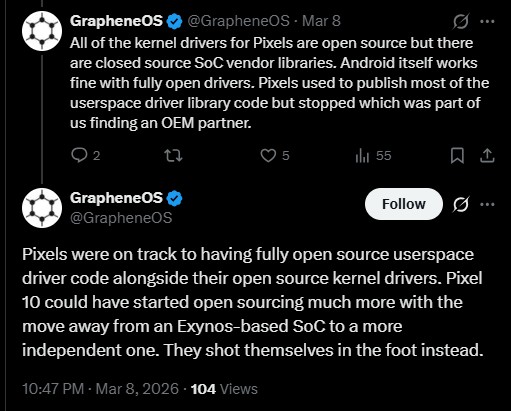
In a short thread on X, the GrapheneOS team clarified that while Android itself works perfectly fine with fully open drivers, the issue lies in Google’s handling of its userspace driver library code.
“Pixels used to publish most of the userspace driver library code but stopped which was part of us finding an OEM partner,” the GrapheneOS team stated. Interestingly, the developers noted that the transition away from Exynos-based SoCs should have been the perfect opportunity for Google to embrace open-source development.
Instead, Google went the opposite direction:
"Pixel 10 could have started open sourcing much more with the move away from an Exynos-based SoC to a more independent one. They shot themselves in the foot instead. They've made it much harder for us to support Pixels."
The Motorola lifeline
This mounting frustration, which has been simmering since the Google security patch backlash, was the catalyst for the project’s pivot. The writing was on the wall late last year when GrapheneOS announced it was actively seeking a new OEM to end its Pixel exclusivity.
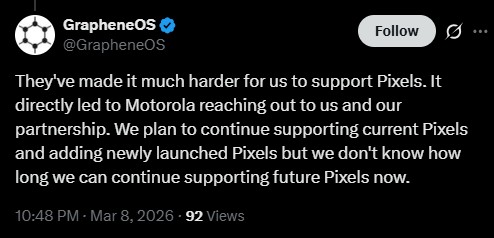
According to the team, Google’s closed-source shift “directly led to Motorola reaching out to us and our partnership.” As we covered extensively earlier this month, Motorola and GrapheneOS have officially partnered to launch the first non-Pixel privacy smartphone. The phones are not expected until at least 2027.
While the privacy community is currently rallying behind GrapheneOS as it calls on developers to boycott the European Unified Attestation, the lingering question is what happens to existing Pixel users.
The developers confirmed they plan to continue supporting current Pixels and will add newly launched models for now. However, they offered a sobering warning: “We don’t know how long we can continue supporting future Pixels now.” This echoes my earlier analysis that the Pixel 11 could very well be the last new Pixel to gain official GrapheneOS support.
For privacy enthusiasts, the message is clear: the future of secure, de-Googled hardware no longer runs entirely through Mountain View.


Hillary Keverenge
2577 Posts
Tech has been my playground for over a decade. While the Android journey began early, it truly took flight with the revolutionary Lollipop update. Since then, it's been a parade of Android devices (with a sprinkle of iOS), culminating in a mostly happy marriage with Google's smart home ecosystem. Expect insightful articles and explorations of the ever-evolving world of Android and Google products coupled with occasional rants on the Nest smart home ecosystem.
Next article View Article